
Want More Than Sunday Faith?
This is where bold believers get fed.
Bible-strong teaching, Holy Spirit fire, and practical activation. Because we don’t just talk about the Kingdom… we build it!
Featured Message
Break Free From Analysis Paralysis And Find Your TRUE Purpose
Fear. Confusion. Doubt. They are keeping so many believers stuck. But God never meant for you to live in uncertainty.
Watch Recent Messages
Curated Playlists
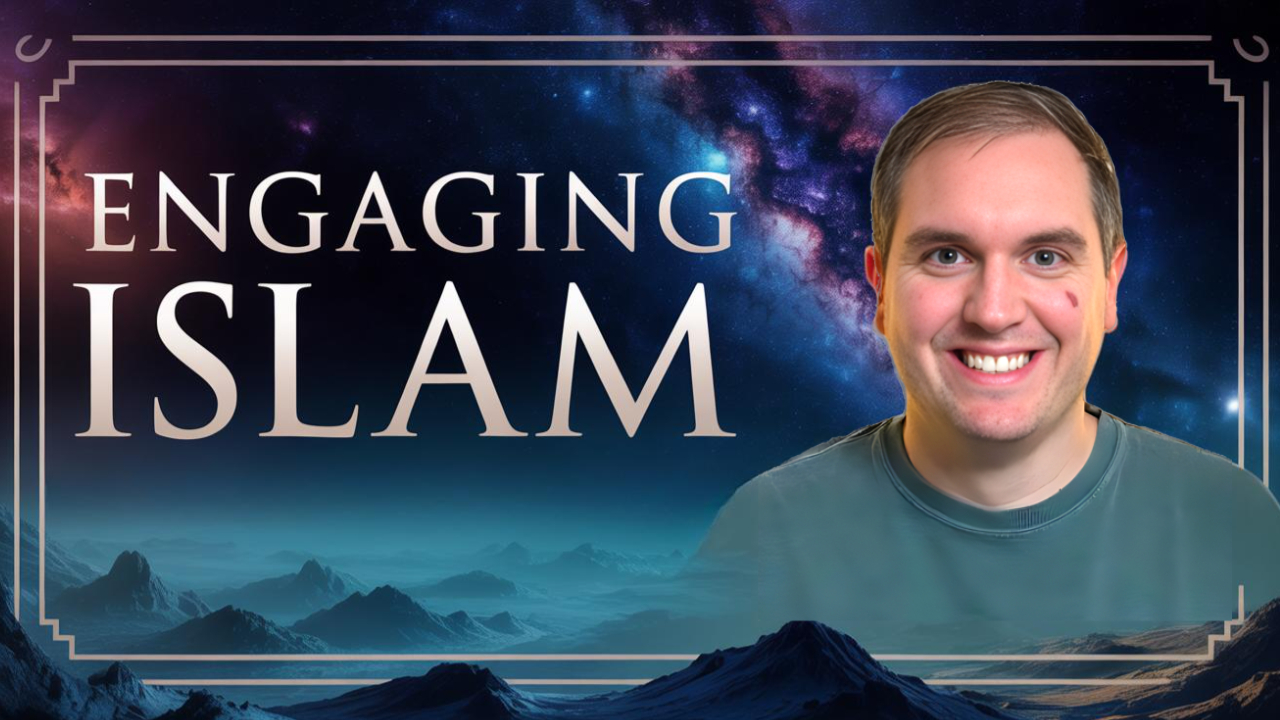
Devotionals & Discipleship
This isn’t just about consuming content - it’s about being transformed by the Holy Spirit.

Does the Trinity Mean Christians Worship Three Gods?
" The Trinity isn’t a contradiction—it’s the perfection of divine relationship."
Does the Trinity Mean Christians Worship Three Gods? The Truth About One God in Three Persons
For many Muslims, the Christian doctrine of the Trinity sounds like heresy. They hear “Father, Son, and Holy Spirit” and imagine three separate gods sitting on three thrones. Some even think Christians worship God, Jesus, and Mary as a divine trio.
But that’s not the Trinity—and it never has been.
Christians don’t believe in three gods. We believe in one God who has eternally existed in three persons: Father, Son, and Holy Spirit. Three distinct persons, yet one divine essence. Not a contradiction, but a mystery—one the Bible declares and history defends.
And understanding this truth changes everything—how we pray, how we see God, and how we understand His love for us.
What the Trinity Really Means
The Trinity isn’t an abstract theological puzzle. It’s the heart of who God is.
God the Father created all things and sustains life.
God the Son entered our world to redeem it.
God the Holy Spirit fills believers with power and presence.
Three persons, perfectly united in one divine nature. Not three gods working together, but one God revealing Himself in perfect relational harmony.
When Jesus said, “Go therefore and make disciples of all nations, baptizing them in the name of the Father and the Son and the Holy Spirit” (Matthew 28:19), He wasn’t introducing three deities. He was revealing the fullness of the one true God.
This doctrine doesn’t make Christianity polytheistic. It makes it personal. God didn’t just rule from heaven—He stepped into history, walked among us, and now lives within us.
Unity, Not Division
The Trinity isn’t three gods cooperating; it’s one God existing in three co-equal, co-eternal persons.
The Father isn’t the Son. The Son isn’t the Spirit. Yet each is fully and completely God.
We see this harmony throughout Scripture:
At Jesus’ baptism, the Father speaks from heaven, the Son stands in the water, and the Holy Spirit descends like a dove (Matthew 3:16–17).
In creation, God the Father creates through the Word (Jesus) by the power of the Spirit (Genesis 1; John 1:1–3).
In salvation, the Father sends the Son to redeem, and the Spirit seals and empowers those who believe (Ephesians 1:3–14).
Each person plays a distinct role, yet the mission is unified—rescue humanity and restore relationship with God.
As the Nicene Creed puts it:
“We believe in one God, the Father Almighty… and in one Lord Jesus Christ… and in the Holy Spirit, the Lord, the giver of life.”
One essence. One being. One eternal God.
The Bible’s Witness to the Trinity
The Trinity isn’t a man-made doctrine—it’s woven into the pages of Scripture.
In Genesis 1:26, God says, “Let Us make man in Our image.”
In Genesis 11:7, He says, “Let Us go down and confuse their language.”
In Isaiah 6:8, the Lord asks, “Whom shall I send, and who will go for Us?”
These glimpses of plurality in unity find their full revelation in the New Testament:
John 1:1 — “In the beginning was the Word, and the Word was with God, and the Word was God.”
John 14:26 — The Father sends the Holy Spirit in the name of the Son.
2 Corinthians 13:14 — “The grace of the Lord Jesus Christ, the love of God, and the fellowship of the Holy Spirit be with you all.”
The Trinity isn’t an invention of the early Church. It’s the Bible’s own description of the living God.
Why Muslims Reject It—and How to Respond
In Islam, the oneness of God (Tawhid) is absolute. Any suggestion of plurality sounds like polytheism. That’s why many Muslims see the Trinity as blasphemous or illogical.
But here’s the problem: they’re rejecting a version of the Trinity the Bible never teaches.
The Christian view doesn’t divide God—it reveals Him more completely.
When Muslims argue that “1 + 1 + 1 = 3,” they’re using human math to explain divine mystery. But God is not an equation. A better comparison is “1 × 1 × 1 = 1.” Each Person is distinct, yet all share the same divine essence.
Even within Islamic thought, there’s a paradox worth noting: the Qur’an itself is considered eternal and uncreated—existing alongside Allah. That admission acknowledges a kind of plurality within divine unity. Complexity doesn’t destroy oneness—it defines it.
The Trinity isn’t a contradiction; it’s the perfection of divine relationship.
Analogies That Help (and Their Limits)
No analogy can fully capture God, but some can help illuminate truth.
Water can exist as liquid, ice, and vapor—three forms, one substance.
The sun gives light, heat, and energy—different expressions of the same source.
An egg has shell, white, and yolk—distinct parts, yet one egg.
Each analogy falls short, but they help break through confusion. They remind us that unity and diversity are not opposites—they’re reflections of God’s very nature.
As St. Augustine once wrote, “If you can fully understand it, it’s not God.”
The Trinity isn’t meant to fit neatly into our logic. It’s meant to draw us into awe.
Why the Trinity Matters
The Trinity isn’t just a doctrine—it’s the framework for everything we believe.
Without it, the Gospel collapses.
If Jesus isn’t fully God, He can’t save us.
If the Spirit isn’t God, He can’t dwell within us.
If the Father isn’t God, He can’t forgive us.
Every part of salvation is the work of one triune God:
The Father plans, the Son accomplishes, the Spirit applies.
This is why Christianity stands apart. God doesn’t just love from a distance—He loves from within relationship. The eternal love shared between Father, Son, and Spirit overflowed into creation and redemption.
That’s not confusion—it’s compassion. Not contradiction—it’s perfection.
Your Next Step
When someone says, “The Trinity makes no sense,” don’t panic. It’s not supposed to make sense to the human mind. It’s meant to reveal a God beyond comprehension—yet near to the heart.
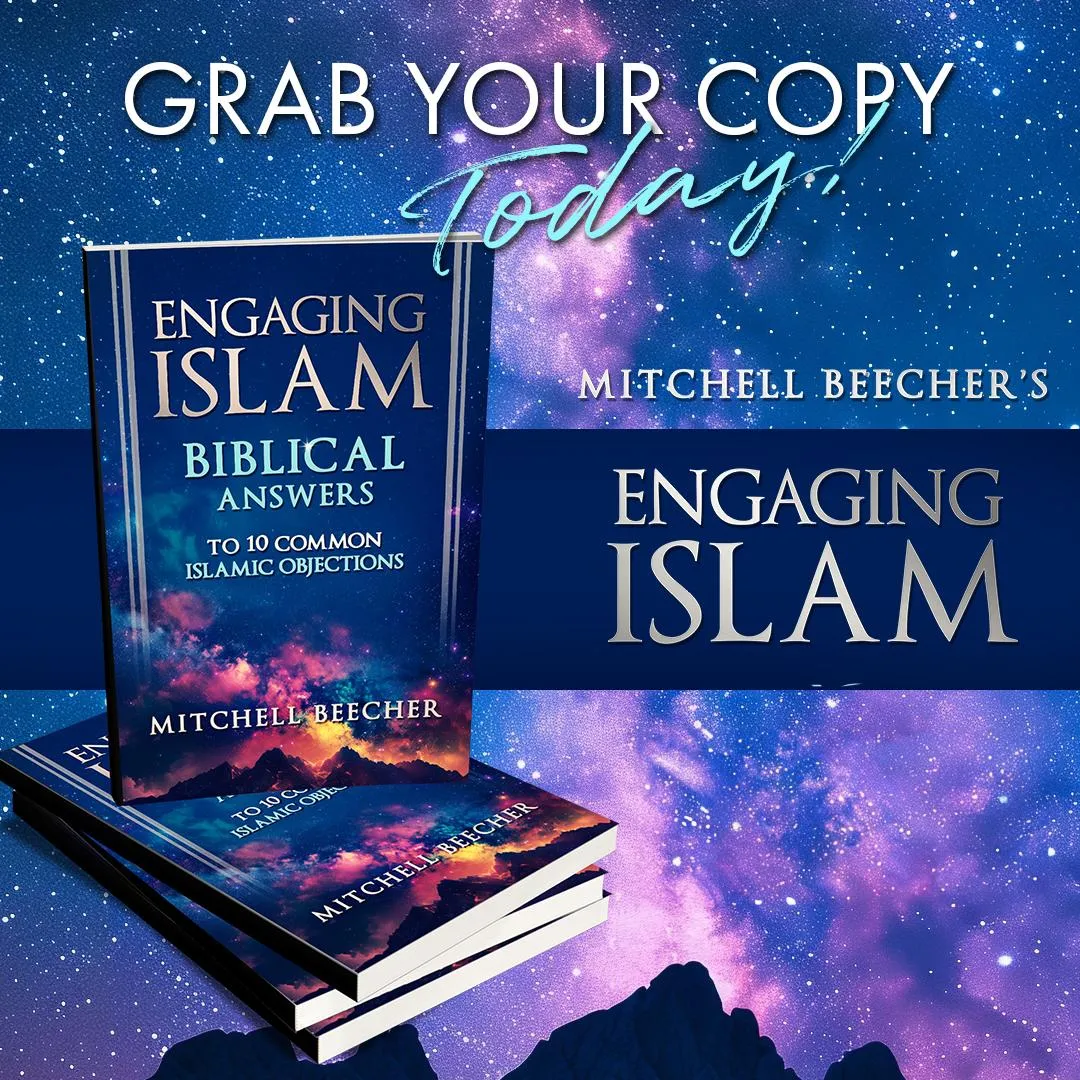
📘 Get the book: Engaging Islam: Biblical Answers to 10 Common Islamic Objections.
This chapter unpacks the logic and love of the Trinity so you can explain it clearly in any conversation.
▶️ Watch the full message: Does the Trinity Mean Three Gods? on YouTube.
You’ll learn how to address Muslim objections, use biblical analogies, and strengthen your understanding of the Triune God.
Final Word
The Trinity isn’t a problem to solve—it’s a person to know.
One God. Three persons. Perfect love.
The Father loves.
The Son redeems.
The Spirit empowers.
That’s not polytheism—that’s perfection.
And that’s the God who calls you His own.

Short, Bible-strong encouragement in your inbox. Bold faith, Spirit-led living, and practical truth you can live out immediately.
Ready to Go Deeper?

Don’t settle for passive Christianity.
This is your roadmap to bold, Spirit‑led living.
Equipping believers to break free from passive faith and live with bold, Spirit-led purpose.


Copyright 2025. Be Kingdom Builders. All rights reserved.