The cross is not a symbol of defeat. It is the most strategic move in human history, and it also happens to be the single point where Christianity and Islam disagree most directly about what actually happened.
This is part three of our four-part series on engaging Islam with the Gospel. Part one answered the objections that the Bible is corrupted and too fragmented to trust. Part two answered the objections that Jesus never claimed to be God, that God cannot have a Son, and that the Trinity means three gods. Tonight's two objections go straight at the center of the faith itself: the cross and what it means.
Objection: Jesus was never crucified
Paul said it plainly in 1 Corinthians 15: if Christ has not been raised, your faith is worthless and you are still in your sins. Everything in Christianity hinges on the cross actually happening. Islam denies that it did. The Quran states in Surah 4:157 that it only appeared that Jesus was crucified, that God made someone else look like Him, and that Jesus was taken up to heaven before any of it occurred. In Islamic thought, a true prophet would never be permitted to suffer that kind of disgrace.
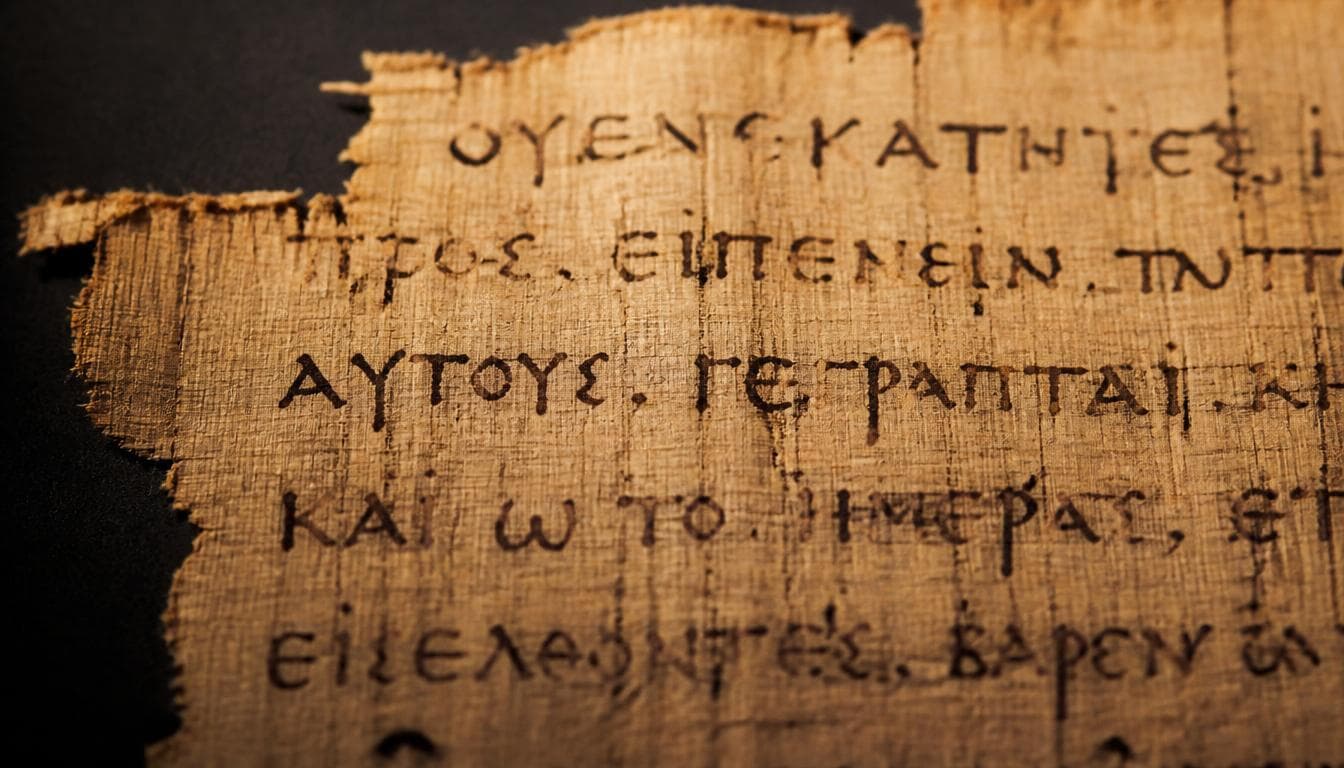
So did it happen? The historical case does not rest on the Gospels alone. Tacitus, a Roman historian writing around 116 AD with no reason to protect the Christian story, records in his Annals that Jesus was executed under Pontius Pilate during the reign of Tiberius. Josephus, a Jewish historian with the same lack of motive, references Jesus being condemned to the cross by Pilate in his Antiquities of the Jews. All four Gospels record the crucifixion independently, and Paul writes about it in letters dated within twenty years of the event, among the earliest documents in the New Testament. Bart Ehrman, one of the most skeptical New Testament scholars working today and no defender of Christian orthodoxy, has said the crucifixion is one of the most certain facts of ancient history. The historical record settles whether it happened. What it means is the real question.
That question is why God would require a sacrifice at all. Why not simply forgive? Here is the answer: God is not only loving, He is also just, and justice requires that sin be addressed rather than waved away. A judge who loves the defendant but dismisses the charges without consequence is not being loving, he is being corrupt. Romans 3:23 says all have sinned, and Romans 6:23 says the wages of sin is death. That is the problem atonement solves. Instead of requiring us to pay a penalty we could never survive, God stepped in and paid it Himself. Hebrews 9:22 says without the shedding of blood there is no forgiveness, and Isaiah 53, written seven hundred years before crucifixion existed as a Roman practice, describes a suffering servant pierced for our offenses and crushed for our wrongdoings. That is not coincidence. That is prophecy.
There is an older layer underneath this worth knowing. In Genesis 15, God makes Abram an extraordinary promise, and Abram prepares for it the way ancient covenants were sealed: cutting animals in half, laying the pieces in two rows, both parties walking between them as a self-curse, each staking their life on keeping the promise. But when the moment comes, God puts Abram into a deep sleep. Abram never walks through. Instead, a smoking firepot and a flaming torch, symbols of God's presence throughout the Old Testament, pass between the pieces alone. God made the covenant unilateral. He carried the entire weight of the oath Himself, because He knew what human faithfulness would actually do with a two-sided deal. Centuries later, Jesus hangs between the torn pieces of His own body, bearing a debt humanity never had the ability to pay. Acts 2:23 calls it the predetermined plan and foreknowledge of God. Islam says forgiveness is earned through obedience. Christianity says it is paid for through substitution. One of those is a life sentence of trying to be enough. The other is finished.
Go deeper: Was Jesus Really Crucified? History, Scripture, and the Truth About Atonement
Objection: God would not let a prophet suffer that disgrace
Even a Muslim willing to grant that Jesus died often cannot accept that God would let one of His prophets endure the most shameful death Rome had to offer. It is a fair question, and the Bible's answer is consistent everywhere else you look for it.
Suffering was never a sign of divine abandonment in Scripture. Joseph was sold into slavery by his own brothers and imprisoned for a crime he did not commit, and God used every year of it to position him to save nations. Job lost his wealth, his children, and his health, and his friends' theory that God must be punishing him was wrong. Jeremiah spent forty years preaching to a nation that would not listen and was thrown into a cistern for his trouble. None of that was God being absent. It was God working through suffering toward something the person living it could not yet see.
The cross itself was foretold in specific detail, not improvised after the fact. Psalm 22, written roughly a thousand years before Jesus, opens with the words He quotes from the cross in Matthew 27:46, and goes on to describe the mocking, the pierced hands and feet, and the casting of lots for clothing. Isaiah 53 describes a suffering servant despised and rejected, bearing griefs that were never his own. Acts 2:23 again calls the whole event the predetermined plan of God, not an accident and not a failure to protect His prophet.
Paul names the paradox directly in 1 Corinthians 1:18: the message of the cross is foolishness to those who are perishing, but to those being saved it is the power of God. Rome built the cross to humiliate. Jesus turned it into the opposite of what it was built for. The simplest way to say all of this to a Muslim friend: the real question isn't whether God would let a prophet suffer. It's whether Jesus is more than a prophet. If He is who He said He was, the cross was never abandonment. It was God entering human suffering to redeem it from the inside.
Go deeper: Would God Let a Prophet Suffer the Cross? Understanding Jesus' Redemptive Suffering
This week
- Pick one argument from tonight, the courtroom picture of atonement, the Genesis 15 covenant, or the Joseph and Job pattern of suffering, and practice saying it out loud until it feels natural before next Tuesday.
- Read Isaiah 53 in full this week, slowly. Written seven hundred years before the crucifixion, it reads like an eyewitness account, and it is one of the most powerful passages you can hand a Muslim friend.
- If there is a Muslim in your life, ask God by name for one open door this week. Not a debate. A conversation.
The cross looked like the end of the story. It was the turning point. If you actually know that, you have something worth sharing. Go share it.
Resources mentioned
- Chapter 1 of Engaging Islam, free download: https://bekingdombuilders.com/engaging-islam
- Full Engaging Islam video series on YouTube: https://www.youtube.com/playlist?list=PL3uZ1chcNF1kpmuEGBhg5eSrPj0NkHA2p
- Free Engaging Islam course in BKB Academy
- The false gospel / Hyper Grace series referenced: https://www.youtube.com/watch?v=Euow_qKvRTU&list=PL3uZ1chcNF1n9fR70VJpGrE7-4DrXU7oM&index=16