A Muslim coworker tells you the Bible has been changed. Altered. Corrupted beyond trust. And you freeze.
Not because you do not believe. Because nobody ever equipped you to answer.
That is not your fault. It is the church's silence. Islam is the fastest growing religion in the world by birth rate, and it is no longer something happening overseas. It is in your workplace, your kid's school, your neighborhood. Yet most churches will not touch the topic, afraid of the wrong label or an empty seat next Sunday. So believers walk into real conversations with real people and have nothing to say. The gospel opportunity walks away quiet, and everyone assumes that is just how it goes.
It does not have to be that way. This is the first post in a series built to change that, walking through the objections you will actually hear and the biblical, historical answers that hold up under pressure.
One Question, Two Answers
Christianity and Islam are answering the same question: how does a sinful person get right with a holy God?
Islam's answer is submission. You follow Sharia, a comprehensive code covering everything from prayer to marriage to what you wear, and you obey well enough that Allah might show mercy on the last day. Might. There is no finished work and no assurance, only ongoing effort with an uncertain outcome. It is a works-based system, the same shape every other world religion takes: do enough, and maybe it is enough.
Christianity answers it the opposite way. We could not bridge the gap between a holy God and sinful humanity, so God built the bridge himself, and the bridge is a person. Jesus Christ, who was with God and is God from the beginning (John 1:1), lived, died, and rose so that trusting in him as Lord and Savior is what makes a person right with God. Not a lifetime of unfinished effort. A finished work.
Jesus said it plainly from the cross: "It is finished" (John 19:30). Islam says keep working. Christianity says it is done. That difference is the whole conversation, and every objection you will hear traces back to it.
Objection One: "Your Bible Has Been Corrupted"
This is the objection you will hear first and hear most. The claim is that the text we have today has been changed so many times over so many centuries that nothing about it can be trusted, and if the Bible cannot be trusted, nothing built on it can either.
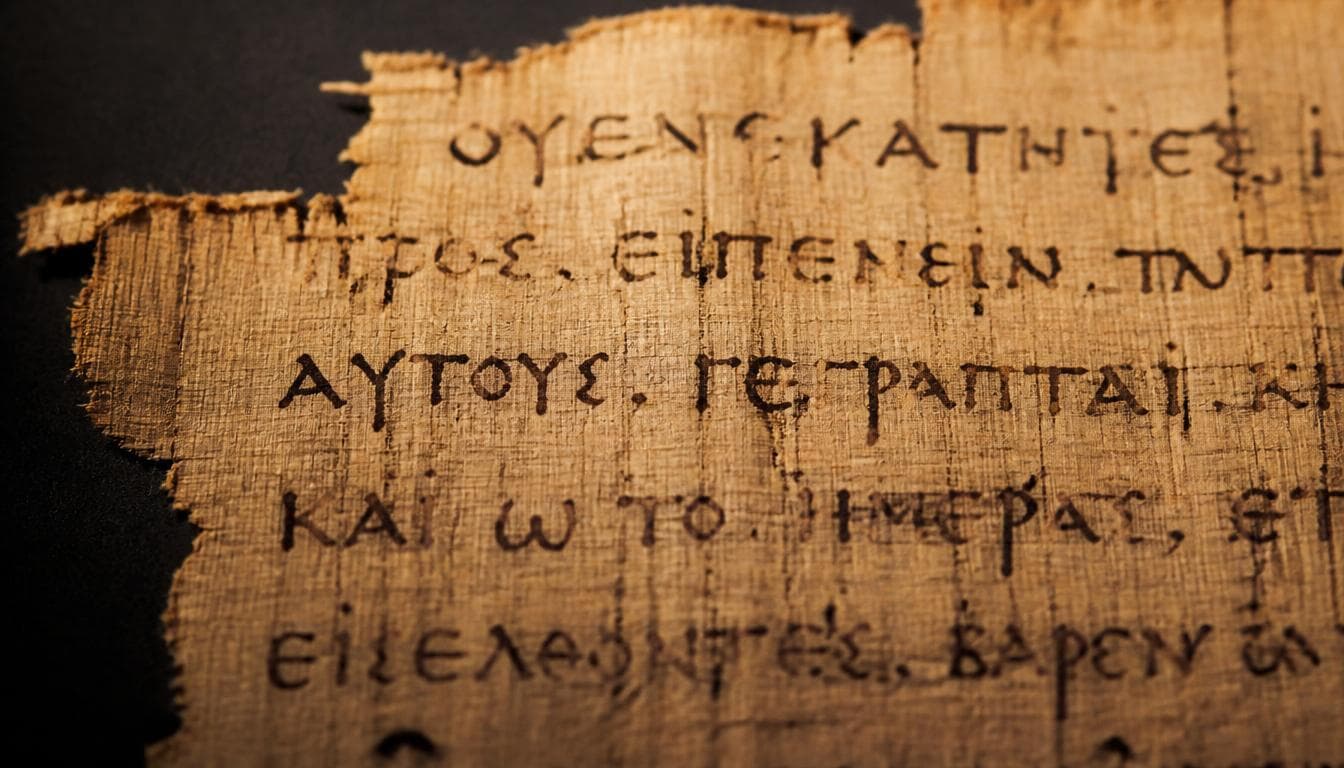
Start with the manuscript evidence, because it is staggering. The New Testament alone has over 24,000 manuscript copies and fragments. Compare that to other ancient texts historians accept without hesitation: Plato survives in seven manuscripts, Julius Caesar's writings in about ten. Some of those manuscripts have a thousand-year gap between the original and the earliest surviving copy, and no one questions them. The New Testament's gap is a fraction of that.
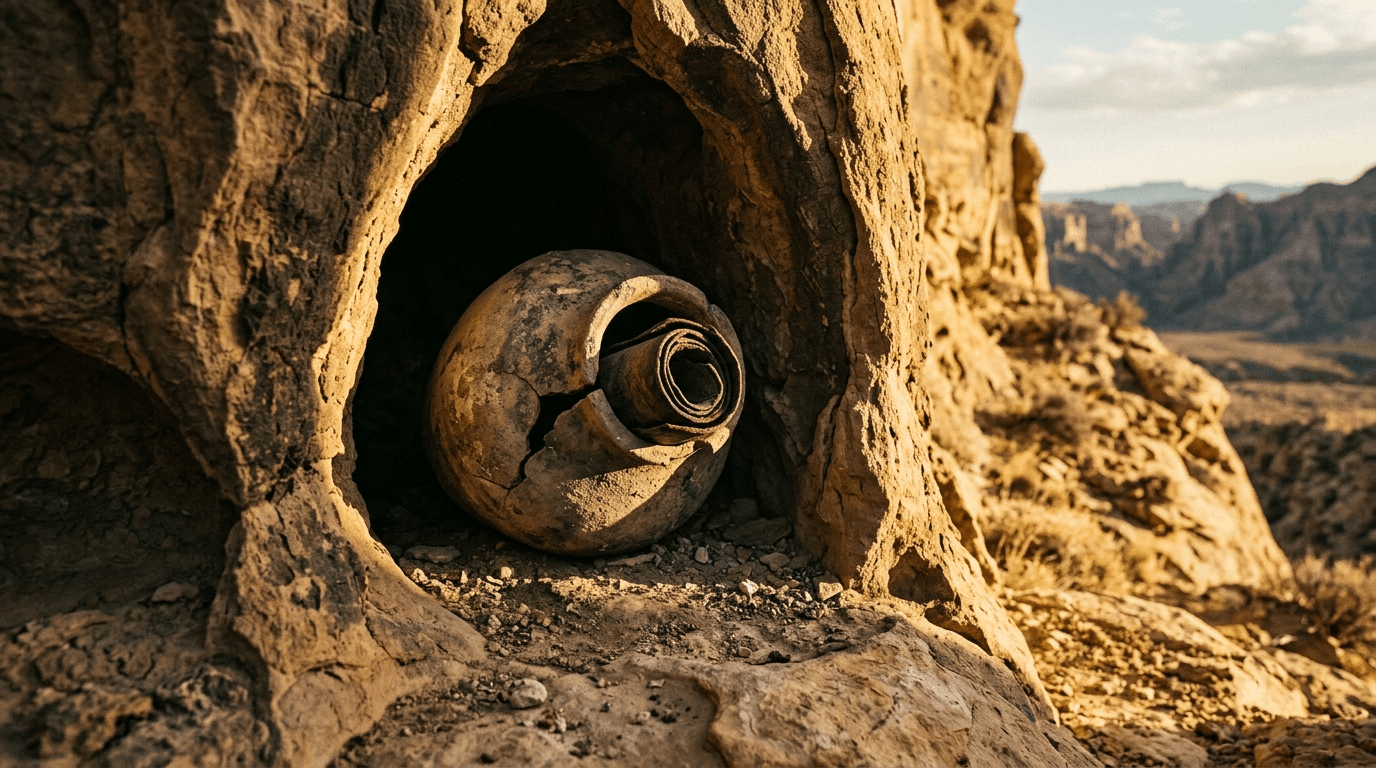
Then there are the Dead Sea Scrolls. In 1946, a Bedouin shepherd boy chasing a runaway goat through the cliffs above the Judean desert tossed a rock into a dark opening in the rock face, expecting to hear it land. Instead he heard pottery shatter. Inside were clay jars holding ancient scrolls. Word spread, and over the next decade archaeologists uncovered eleven caves containing roughly 25,000 fragments from nearly a thousand distinct manuscripts, dated from around 300 BC to 68 AD.
Before that discovery, the oldest surviving copies of the Hebrew Bible dated to around 900 AD. The Dead Sea Scrolls pushed that back over a thousand years, and when scholars compared them to the manuscripts already in use, the text had remained virtually unchanged. The Great Isaiah Scroll, containing the entire book of Isaiah, matches the modern text almost word for word after a thousand years of hand copying.
If someone corrupted the Bible, they did it across thousands of manuscripts, on multiple continents, over centuries, without leaving a single trace behind. That is not a cover-up anyone could actually pull off.
So when someone raises this objection, you do not need to win an argument. Just ask: which part was changed? When was it changed, and by whom? Show me the original and the altered version. No one can answer that, because the evidence does not exist, and the burden of proof belongs to the person making the claim, not to you.
Objection Two: "There Are Too Many Versions to Trust"
This one sounds more complicated than it is. The claim is that because Christians have the KJV, the NIV, the ESV, and more, we cannot even agree on what the Bible says.
Translations are not different Bibles. They are the same source text rendered into different languages and reading levels, the same way the Quran translated into English, Spanish, or Swahili is still one Quran underneath the translation. Every major English translation of Scripture comes from the same manuscripts and agrees on every essential doctrine: the Trinity, the resurrection, the deity of Christ, salvation by grace through faith. The wording shifts. The truth does not move.
This objection usually comes from an Islamic framework where the Quran is only truly the Quran in Arabic. Prayer, the call to prayer, and the declaration of faith all must be spoken in Arabic; anything else is considered explanation, not the text itself. Scripture works differently. God wants to be known by every tribe and language, which is why the Bible has been translated into over 3,000 languages and is still being translated today. Many translations, one message, and Jesus Christ is Lord in every one of them.
The Goal Was Never to Win the Argument
Your job in this conversation is not to defeat someone. It is to hand them the same gospel that set you free.
Start by listening. Ask what they believe and how they came to believe it. Find common ground before you need it: Muslims already affirm one God, the virgin birth, and that Jesus performed miracles and is coming back. Then ask good questions instead of delivering a lecture, and keep bringing every answer back to the same person Jesus asked his own disciples about: "Who do you say I am?" Everything else, the Trinity, the Bible, salvation, flows from that one answer.
Do this in the posture 1 Peter 3:15 describes: ready to give an answer, with gentleness and respect. Not weakness. Wisdom. It is often said that it takes an average of seven years for a Muslim to come to faith in Christ, so do not expect one conversation to close the gap. You are not responsible for the harvest. You are responsible for planting the seed and trusting the Holy Spirit with what happens next.
This Week's Activation
- Name one specific Muslim in your life, a coworker, neighbor, or classmate, and pray for them by name this week.
- Ask them what they believe and how they came to it, genuinely, without an agenda beyond listening.
- If an objection comes up you are not ready for, it is fine to say, "That's a great question, let me get back to you."
- Practice one answer from this post out loud before you need it.
Take the First Step
The Great Commission was never conditioned on feeling ready. Jesus did not say go when it is comfortable. He said go. It will feel awkward the first time, and maybe the second, the same way anything worth doing does before it becomes natural. Take the step anyway. That is what it looks like to leave the sidelines and build the Kingdom.
Resources mentioned
- Get the book or the free Chapter 1 of Engaging Islam: Biblical Answers to 10 Common Islamic Objections: https://bekingdombuilders.com/engaging-islam
- Take the companion Engaging Islam course inside BKB Academy