" We don’t just do sinful things. We are sinful by nature. And that’s exactly why grace is so powerful."
Are We Born Pure? The Truth About Original Sin, Human Nature, and Why We Need Redemption
One of the most common objections Muslims raise sounds simple and even inspiring:
“We’re born pure. There’s no such thing as original sin.”
Islam teaches that every human enters the world innocent, clean, untainted — born upon the fitrah, a natural inclination to good (Quran 30:30). Christianity, on the other hand, teaches that something far more serious is happening inside the human heart.
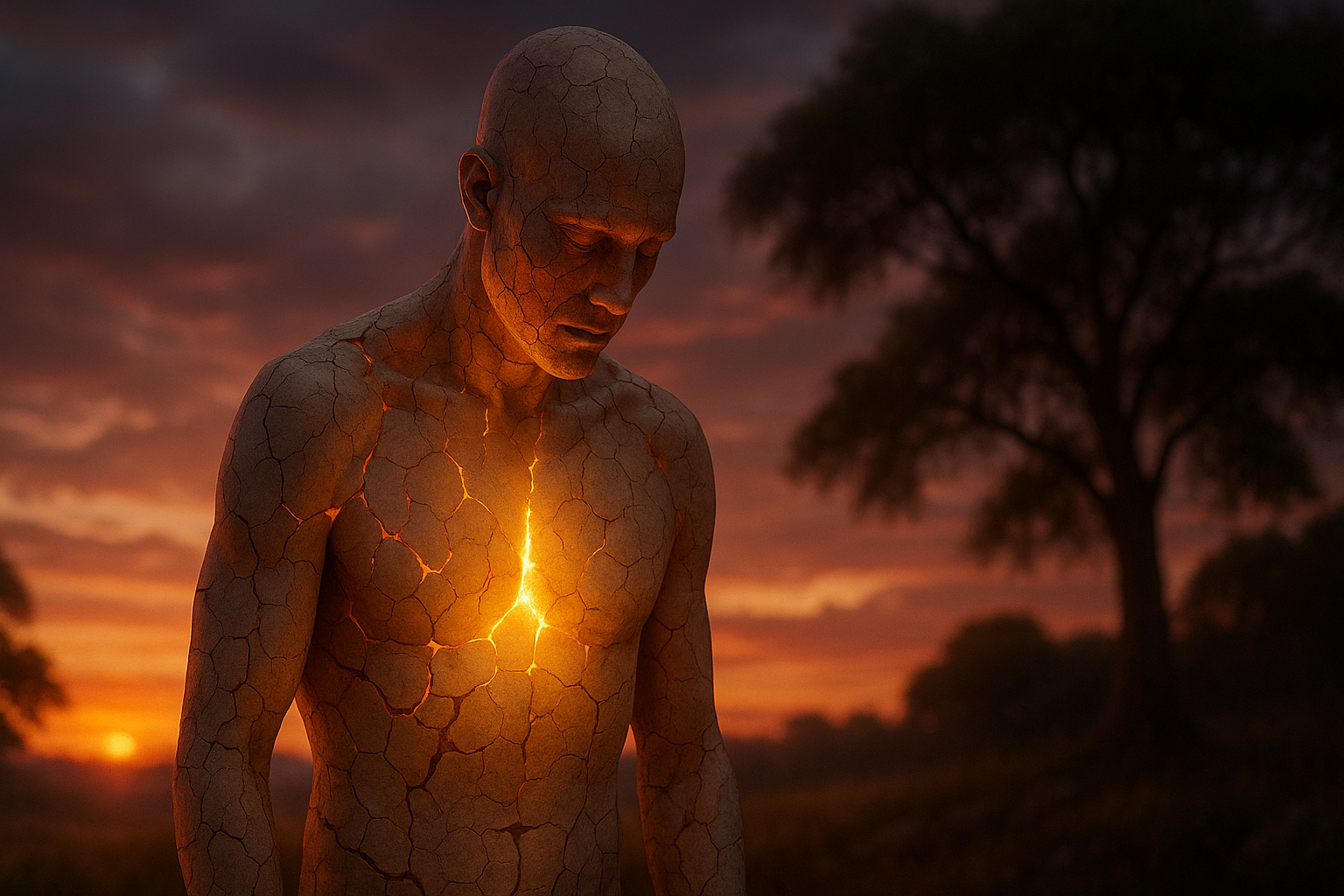
We don’t just do sinful things — we are sinful by nature.
We didn’t become sinners when we committed our first wrong.
We sinned because we were sinners already.
And that fundamental difference doesn’t just shape theology.
It changes how we understand God, salvation, justice, and our deepest need.
Your chapter puts the tension on the table immediately:
“The idea of original sin originates from the Biblical narrative of Adam and Eve’s disobedience… resulting in humanity inheriting a sinful nature.”
This isn’t a side doctrine. This is the foundation the Gospel stands on.
What Really Happened in the Garden? A Broken Relationship Passed Down
Genesis 3 isn’t a children’s story. It’s the spiritual DNA of the human race.
When Adam and Eve disobeyed, something catastrophic happened:
Your chapter summarizes it clearly:
“Their actions introduced sin into the world and established a pattern of disobedience that has since tainted human nature.”
This isn’t metaphor. It’s inheritance.
God’s warning to Adam wasn’t symbolic.
He said, “In the day you eat of it, you will surely die.”
And when Adam fell, we fell with him.
That’s why Romans 5:12 says:
“Through one man sin entered the world… and death through sin… and so death spread to all mankind.”
Adam wasn’t just the first sinner — he was our representative.
His fall became our condition.
Original Sin: Not Just What We Do — What We Are
We often reduce sin to behaviors:
lying, stealing, lust, pride, anger.
But Scripture goes deeper.
Sin is a condition, not just a choice.
A nature, not just an action.
A disease, not just a symptom.
Your chapter highlights this truth through multiple passages:
Psalm 51:5 — “in sin my mother conceived me”
Ephesians 2:3 — “by nature children of wrath”
Genesis 8:21 — “the intent of man’s heart is evil from his youth”
Romans 3:10–12 — “there is no one righteous… not even one”
These passages don’t describe bad habits.
They describe spiritual reality.
We come into this world spiritually broken — separated from God, turned inward, unable to save ourselves.
This is why the chapter explains:
“Individuals are incapable of achieving righteousness on their own.”
Our problem isn’t a lack of information.
It’s a lack of righteousness.
Islam’s View: Born Pure, Then Corrupted
Islam teaches the opposite.
The Qur'an says all people are born good and naturally inclined to truth. Sin is something that happens to you — from environment or upbringing — not something you inherit.
This sounds hopeful, but it creates a massive tension:
If humans are born pure…
why does every society, every culture, every family, and every individual display the same universal pattern of sin?
Your chapter outlines Islam’s view accurately, citing Quran 30:30 and the teaching of fitrah. It explains how Islam emphasizes personal responsibility and denies inherited sin.
But a clean slate cannot explain a crooked world.
And “born pure” doesn’t match what Scripture reveals about the human heart.
Why Original Sin Matters: Without It, the Cross Makes No Sense
This is where everything converges.
If humans are born pure…
if sin is just external…
if human nature is basically good…
…then why did Jesus die?
Why was the cross necessary?
Why did God send His Son at all?
Your chapter hits this head-on:
“Without the inherited sinful condition, the necessity of Christ’s intervention and sacrifice might be questioned.”
Exactly.
If humanity doesn’t need saving, then the Savior becomes unnecessary.
Original sin isn’t a depressing doctrine — it’s an honest one.
It tells the truth about the human condition so we can see the beauty of God’s solution.
Paul lays the contrast out in Romans 5:
through one man came sin and death
through one Man came grace and life
Adam brought condemnation
Christ brings justification
Adam’s disobedience made us sinners
Christ’s obedience makes us righteous
Your chapter cites this entire passage because it’s the clearest parallel in Scripture.
Adam’s fall created the problem.
Christ’s cross is the solution.
You can’t remove the diagnosis without destroying the cure.
Grace Is the Answer to a Problem We Can’t Fix
The doctrine of original sin doesn’t end in despair.
It leads us straight to grace.
Your chapter says:
“Human efforts alone cannot overcome sin; divine intervention is essential.”
This is the heart of Christianity.
Our situation is worse than we think —
but God’s grace is greater than we imagine.
Jesus didn’t come to help good people become better.
He came to resurrect dead people to new life.
Your Next Step
Understanding original sin isn’t about winning arguments.
It’s about seeing the depth of our need and the greatness of our Savior.
📘 Get the book:
Engaging Islam: Biblical Answers to 10 Common Islamic Objections
https://www.amazon.com/Engaging-Islam-Biblical-Answers-Objections/dp/B0DB691LMF
▶️ Watch the full message:
Are We Born Pure? The Truth About Human Nature
https://youtu.be/y42cl9uZlp8
Final Word
We are not born pure.
We are born broken.
But the story doesn’t end there.
God steps into the story we shattered.
He brings redemption into the condition we inherited.
And He offers grace we could never earn.
Original sin shows us our need.
Jesus shows us the answer.
And if you understand both, you won’t just debate Islam more clearly —
you’ll understand your salvation more deeply.